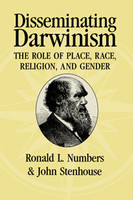
This innovative collection of original essays focuses on the ways in which geography, gender, race, and religion influenced the reception of Darwinism in the English-speaking world of the late nineteenth and early twentieth centuries. Although studies of Darwin and Darwinism have increased dramatically in the past few decades, knowledge of how various groups and regions responded to Darwinism remains unknown. The contributions to this volume collectively illustrate the importance of local social, physical, and religious arrangements, while showing that neither distance from Darwin's home at Down nor size of community greatly influenced how various regions responded to Darwinism. Essays spanning the world from Great Britain and North America to Australia and New Zealand explore the various meanings for Darwinism in these widely separated locales, while other chapters focus on the difference it made in the debates over evolution.
Jacques Derrida (1930-2004) is one of the best known 20th century philosophers and is regarded as the founder of the Deconstruction movement. His work continues to be hugely influential across the...
The contributors are leading scholars from the United States, Canada, Great Britain and Italy. The essays examine the history of music publishing from its inception to the early twentieth century. ...
Chaucer'sundefinedThe Nun's Priest's Taleundefinedis one of the most popular ofundefinedThe Canterbury Tales. It is only 646 lines long, yet it contains elements of a beast fable,...
The definitive work in D&I research -- now completely updated and expanded The application of scientific research to the creation of evidence-based policies is a science unto itself -- and one...