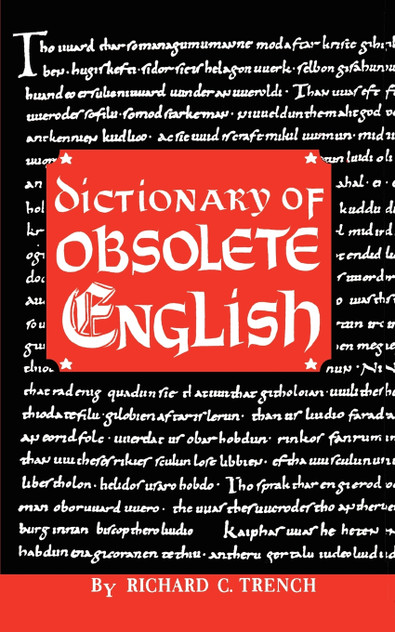
Thomas Wright (1810-77), a respected folklorist and medievalist, wrote prolifically on a wide range of subjects. His work is, however, considered broad rather than deep, and his extensive output, while impressive, sometimes came at the expense of quality. Wright was involved in many academic societies, and co-founded the British Archaeological Association in 1843. Much of his work promoted the use of vernacular literature for research into the Middle Ages, and this dictionary, first published in 1857, was compiled to help readers of historical literature navigate unfamiliar vocabulary. It lists obsolete words and phrases, with particular emphasis on those of Old English and Anglo-Norman origin, and obscure or dialectal words. Many of the definitions include illustrative examples or quotes as well as etymologies. Examples include belly-timber, meaning 'food', and dweezle, a Northamptonshire word that means 'to dwindle away'. Volume 1 covers the letters A-F.
This new edition of the well-known definitive glossary provides the key to those terms in the English language that have either changed their meaning or been altogether discarded . . . Words common...
This work has been selected by scholars as being culturally important, and is part of the knowledge base of civilization as we know it.This work is in the "public domain in the United States of...
Written in the mid-19th century, this comprehensive work contains a wealth of information on archaic regional language, customs, and practices.This work has been selected by scholars as being...
This work has been selected by scholars as being culturally important, and is part of the knowledge base of civilization as we know it.This work is in the "public domain in the United States of...