Perhaps the most famous proposition in the history of philosophy is Descartes' cogito 'I think, therefore I am'. Husain Sarkar claims in this provocative interpretation of Descartes that the ancient tradition of reading the cogito as an argument is mistaken. It should, he says, be read as an intuition. Through this interpretative lens, the author reconsiders key Cartesian topics: the ideal inquirer, the role of clear and distinct ideas, the relation of these to the will, memory, the nature of intuition and deduction, the nature, content and elusiveness of 'I', and the tenability of the doctrine of the creation of eternal truths. Finally, the book demonstrates how Descartes' attempt to prove the existence of God is foiled by a new Cartesian Circle.
Ein Rationalist, der die Welt verbessern und die Sprache der Vernunft liebte, der mit den bestehenden gesellschaftlichen Zuständen unzufrieden war, das war René Descartes. Idealist mit seinem...
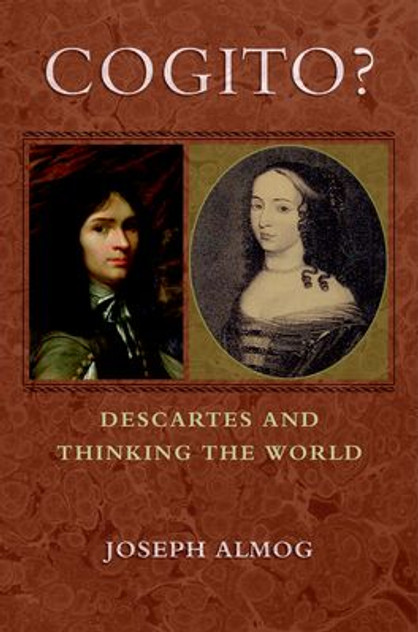
Decartes' maxim Cogito, Ergo Sum (from his Meditations) is perhaps the most famous philosophical expression ever coined. Joseph Almog is a Descartes analyst whose last book WHAT AM I? focused on the...
Studienarbeit aus dem Jahr 2001 im Fachbereich Philosophie - Theoretische (Erkenntnis, Wissenschaft, Logik, Sprache), Note: 1,0, Universität Bremen (Philosophisches Seminar), Sprache: Deutsch,...
by Paul Ricoeur It is already a piece of good fortune to find oneself understood by a reader who is at once demanding and benevolent. It is an even greater fortune to be better understood by another...
The Cartesian cogitoundefined;the principle articulated by Descartes that undefined#34;I think, therefore I amundefined#34;undefined;is often hailed as the precursor of modern science. At the same...