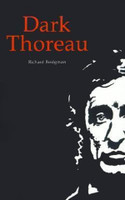
Henry David Thoreau has suffered from a largely uncritical admiration of his roles as naturalist, economist, political theorist, and expository writer. The evidence this book presents substantially modifies our understanding of his performance of those roles. It draws heavily on the largely unknown territory of Thoreau's seven thousand pages of journals as well as his poetry, while at the same time subjecting passages from such familiar work as Walden to fresh interpretation.
Dark Thoreau argues that Thoreau elected to associate himself with the American romantic movement as a form of rebellion from a Concord from which he was alienated. However, the affirmations of transcendentalism were often unavailable to him, so that he (and his writing) suffered the tensions of disharmony: animal life proved savage and sensual, the primitive wilderness alarming, and after the Indian failed him, only the militant John Brown furnished a surrogate Thoreau could enthusiastically support.
Thoreau's frustrations manifested themselves not only in passive lamentations but also in expressions of aggression. The terms in which he cast his anger were often imagistically violent, involving a desire to injure, suffocate, drown, and blow up that which he despised. Even his most affirmative assertions about the world were likely to be tinged with doubt.
Our preoccupation with Thoreau as the symbol of man in harmony with a benign wilderness has tended to divert us from the full dimensions of his mind. The present account of the dark Thoreau will require subsequent readers to add his savagery and pessimism to their sense of the man, to complicate this saint of the woods by accepting his doubt, his anger, and his fallibility.