Crosbie Smith explores the trials and tribulations of first-generation Victorian mail steamship lines, their passengers, proprietors and the public. Eyewitness accounts show in rich detail how these enterprises engineered their ships, constructed empire-wide systems of steam navigation and won or lost public confidence in the process. Controlling recalcitrant elements within and around steamship systems, however, presented constant challenges to company managers as they attempted to build trust and confidence. Managers thus wrestled to control shipbuilding and marine engine-making, coal consumption, quality and supply, shipboard discipline, religious readings, relations with the Admiralty and government, anxious proprietors, and the media - especially following a disaster or accident. Emphasizing interconnections between maritime history, the history of engineering and Victorian culture, Smith's innovative history of early ocean steamships reveals the fraught uncertainties of Victorian life on the seas.
This work has been selected by scholars as being culturally important, and is part of the knowledge base of civilization as we know it.This work is in the "public domain in the United States of...
This work has been selected by scholars as being culturally important, and is part of the knowledge base of civilization as we know it. This work was reproduced from the original artifact, and...
This report provides an in-depth analysis of the accident that occurred on the steamship Princeton in 1844, which resulted in the deaths of several high-profile government officials. The authors draw...
This work has been selected by scholars as being culturally important, and is part of the knowledge base of civilization as we know it. This work was reproduced from the original artifact, and...
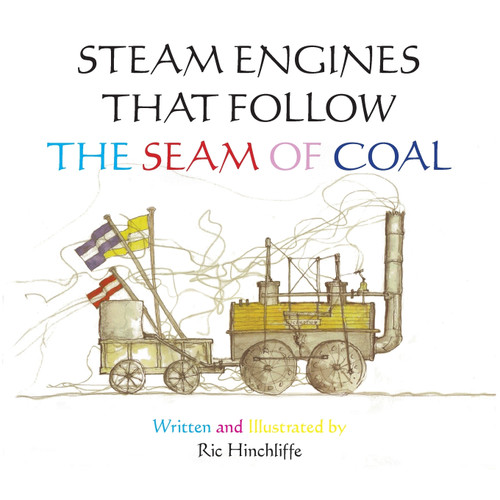
"Another story of utter nonsense to entertain and delight young and old alike. The Seam of Coal is inspired by the Settle Carlisle, Leeds Morecambe and the Kirkby Stephen Stainmore railways. Lenny...