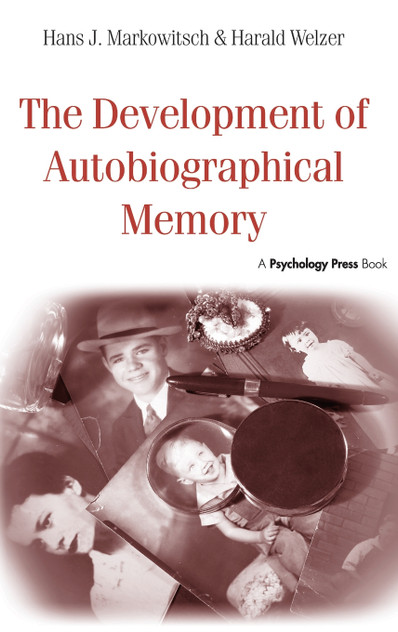
Autobiographical memory plays a key role in psychological well-being, and the field has been investigated from multiple perspectives for over thirty years. One large body of research has examined the basic mechanisms and characteristics of autobiographical memory during general cognition, and another body has studied what happens to it during psychological disorders, and how psychological therapies targeting memory disturbances can improve psychological well-being. This edited collection reviews and integrates current theories on autobiographical memory when viewed in a clinical perspective. It presents an overview of basic applied and clinical approaches to autobiographical memory, covering memory specificity, traumatic memories, involuntary and intrusive memories, and the role of self-identity. The book discusses a wide range of psychological disorders, including depression, post-traumatic stress disorder (PTSD), borderline personality disorder and autism, and how they affect autobiographical memory. It will be of interest to students of psychology, clinicians and therapists alike.
The meeting Theoretical Perspectives on Autobiographical Memory was held at the Grange Hotel, Grange-over-Sands, in the Lake District region of North Western England, July 1991. The workshop was...
Lee S. Thomas spent his seventh birthday, in February 5 1891, watching the Spokane Falls from the immigrant car of the trans-continental railroad. The next day, his family settled in Washington...
Autobiographical memory constitutes an essential part of our personality, giving us the ability to distinguish ourselves as an individual with a past, present and future. This book reveals how the...