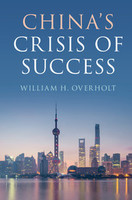
China's Crisis of Success provides new perspectives on China's rise to superpower status, showing that China has reached a threshold where success has eliminated the conditions that enabled miraculous growth. Continued success requires re-invention of its economy and politics. The old economic strategy based on exports and infrastructure now piles up debt without producing sustainable economic growth, and Chinese society now resists the disruptive change that enabled earlier reforms. While China's leadership has produced a strategy for successful economic transition, it is struggling to manage the politics of implementing that strategy. After analysing the economics of growth, William H. Overholt explores critical social issues of the transition, notably inequality, corruption, environmental degradation, and globalisation. He argues that Xi Jinping is pursuing the riskiest political strategy of any important national leader. Alternative outcomes include continued impressive growth and political stability, Japanese-style stagnation, and a major political-economic crisis.
A controversial look at the impending Chinese economic collapse?the history behind it, its contemporary causes, and its dire implications for the global economy All the experts agree: the 21st...
This work has been selected by scholars as being culturally important, and is part of the knowledge base of civilization as we know it.This work is in the "public domain in the United States of...
While past public crises were addressed by focusing on protecting the public safety and maintaining public order, public crises today, such as the COVID-19 outbreak, require different responses and...