Júnia Ferreira Furtado offers a fascinating study of the world of a freed woman of color in a small Brazilian town where itinerant merchants, former slaves, Portuguese administrators and concubines interact across social and cultural lines. The child of an African slave and a Brazilian military nobleman of Portuguese descent, Chica da Silva won her freedom using social and matrimonial strategies. But her story is not merely the personal history of a woman, or the social history of a colonial Brazilian town. Rather, it provides a historical perspective on the cultural universe she inhabited, and the myths that were created around her in subsequent centuries, as Chica de Silva came to symbolize both an example of racial democracy and the stereotype of licentiousness and sensuality always attributed to the black or mulatta female in the Brazilian popular imagination.
This work has been selected by scholars as being culturally important, and is part of the knowledge base of civilization as we know it. This work was reproduced from the original artifact, and...
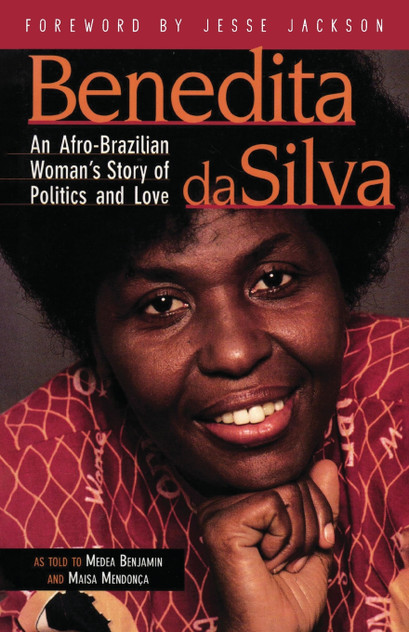
This is a first hand account of the most pressing social problems in Brazil: indigenous rights, street children, land and racism. Her activism, from her days as a favela organizer to national...
Ein komplett neuer Lebensabschnitt hat für Eleonora und auch für Dario begonnen. Sie müssen mit vielen Veränderungen zurechtkommen, doch sie bekommen nicht die Chance, sich die Zeit dafür zu nehmen,...
Teresa da Silva, overweight, depressed, drink dependent, and her struggles in the city, estranged from her daughter who lives with her ex-husband in England.
This work has been selected by scholars as being culturally important, and is part of the knowledge base of civilization as we know it.This work is in the "public domain in the United States of...