Trending Bestseller

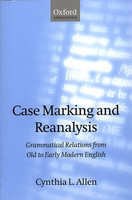
Case Marking and Reanalysis

No reviews yet Write a Review
Now available as a paperback edition, this unique study brings together the methodology, concepts, and principles of historical linguistics and linguistic theory in a pioneering study of the transformation of Old to Middle English and the attendant loss of inflection.
Paperback / softback
01-May-1999
RRP: $150.95
$125.00
Ships in 3-5 business days
Hurry up! Current stock:
It is commonly stated that the loss of case marking distinctions between Old and Middle English had profound consequences for the syntax of the language. In particular, linguists have attributed both the loss of the 'impersonal' constructions such as methinks and the introduction of new passives such as he was given a book directly to the loss of case marking distinctions. However, the existing analyses generally suffer from empirical inadequacies; insufficient available information concerning the case marking systems (as opposed to the forms) makes it difficult to determine exactly when crucial marking distinctions disappeared. Dr Allen makes a careful examination of the primary evidence for how the loss of case distinctions proceeded, and of the temporal relationship between changes in morphology and particular syntactic changes. She demonstrates that morphological change had a less direct role in the triggering of syntactic change than is usually assumed, and that some changes traditionally considered to be the result of syntactic reanalysis are better treated in other ways. Some changes to grammatical relations werenot the result of syntactic reanalysis, but were caused by changes in verbal semantics, while others which have been treated as syntactic reanalysis in fact involved no change to grammatical relations, but only to the possible case marking associated with subjects. Endorsement: 'Fruitful interaction between historical linguistics and linguistic theory is rarely the aim and even more rarely achieved ... Allen's work is a remarkable exception. It is her avowed intention to being together the methodology, assumptions and principles of the two disciplines, to show that each can benefit from the other. This she does with signal success. Allen presents a careful and detailed examination of changes in case marking and claimed relationships to syntactic changes. This in itself is valuable and significant. More than this, Allen provides a thoroughly worked-out, clearly presented model of historical linguistic investigation ... a rewarding blend of descriptive rigour and theoretical insight.' Australian Journal of Linguistics (24/02/1998)

This product hasn't received any reviews yet. Be the first to review this product!

RRP: $150.95
$125.00
Ships in 3-5 business days
Hurry up! Current stock:

Case Marking and Reanalysis

RRP: $150.95
$125.00

Description

It is commonly stated that the loss of case marking distinctions between Old and Middle English had profound consequences for the syntax of the language. In particular, linguists have attributed both the loss of the 'impersonal' constructions such as methinks and the introduction of new passives such as he was given a book directly to the loss of case marking distinctions. However, the existing analyses generally suffer from empirical inadequacies; insufficient available information concerning the case marking systems (as opposed to the forms) makes it difficult to determine exactly when crucial marking distinctions disappeared. Dr Allen makes a careful examination of the primary evidence for how the loss of case distinctions proceeded, and of the temporal relationship between changes in morphology and particular syntactic changes. She demonstrates that morphological change had a less direct role in the triggering of syntactic change than is usually assumed, and that some changes traditionally considered to be the result of syntactic reanalysis are better treated in other ways. Some changes to grammatical relations werenot the result of syntactic reanalysis, but were caused by changes in verbal semantics, while others which have been treated as syntactic reanalysis in fact involved no change to grammatical relations, but only to the possible case marking associated with subjects. Endorsement: 'Fruitful interaction between historical linguistics and linguistic theory is rarely the aim and even more rarely achieved ... Allen's work is a remarkable exception. It is her avowed intention to being together the methodology, assumptions and principles of the two disciplines, to show that each can benefit from the other. This she does with signal success. Allen presents a careful and detailed examination of changes in case marking and claimed relationships to syntactic changes. This in itself is valuable and significant. More than this, Allen provides a thoroughly worked-out, clearly presented model of historical linguistic investigation ... a rewarding blend of descriptive rigour and theoretical insight.' Australian Journal of Linguistics (24/02/1998)
Customers Also Viewed