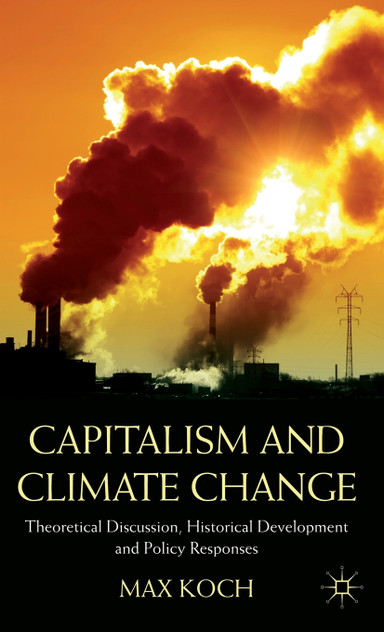
The promise of harnessing market forces to combat climate change has been unsettled by low carbon prices, financial losses, and ongoing controversies in global carbon markets. And yet governments around the world remain committed to market-based solutions to bring down greenhouse gas emissions. This book discusses what went wrong with the marketisation of climate change and what this means for the future of action on climate change. The book explores the co-production of capitalism and climate change by developing new understandings of relationships between the appropriation, commodification and capitalisation of nature. The book reveals contradictions in carbon markets for addressing climate change as a socio-ecological, economic and political crisis, and points towards more targeted and democratic policies to combat climate change. This book will appeal to students, researchers, policy makers and campaigners who are interested in climate change and climate policy, and the political economy of capitalism and the environment.
Climate change is an environmental problem of unprecedented complexity, not just in terms of its physical, social, economic and political impacts, but particularly in terms of the range of policy...
In this book, Richard Rosenzweig, describes the policies proposed and adopted in the first generation of climate change policy-making including the Kyoto Protocol and the carbon markets and assesses...
This book describes the application of surface chemistry methods for carbon capture and recycling as related to climate change and CO2 concentration increase in the air. This online educational...
This book builds on a decade-long experience with mechanisms provided by the Kyoto Protocol and the UN Framework Convention on Climate Change. It discusses the challenges of climate finance in the...