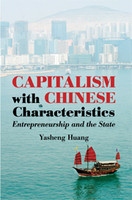


Presents a story of two Chinas - an entrepreneurial rural China and a state-controlled urban China. In the 1980s, rural China gained the upper hand. In the 1990s, urban China triumphed. In the 1990s, the Chinese state reversed many of its rural experiments, with long-lasting damage to the economy and society. A weak financial sector, income disparity, rising illiteracy, productivity slowdowns, and reduced personal income growth are the product of the capitalism with Chinese characteristics of the 1990s and beyond. While GDP grew quickly in both decades, the welfare implications of growth differed substantially. The book uses the emerging Indian miracle to debunk the widespread notion that democracy is automatically anti-growth. As the country marked its 30th anniversary of reforms in 2008, China faces some of its toughest economic challenges and substantial vulnerabilities that require fundamental institutional reforms.
Originally published in 1894, this early work on Chinese culture is both expensive and hard to find in its first edition. It contains details on the author’s experiences of various aspects of Chinese...
This scarce antiquarian book is a facsimile reprint of the original. Due to its age, it may contain imperfections such as marks, notations, marginalia and flawed pages. Because we believe this work...
Interest in China's scientific and technological capabilities has grown in recent years, alongside with the awareness that globalization is changing the dynamics of research and innovation. China's...
This book covers the whole system of Socialism with Chinese Characteristics, dealing with Deng Xiaoping's theory, the socialist market economy, a moderately well-off (Xiaokang) society, China's...