Sir Harry Godwin looks back over sixty years of life at Clare College, the University of Cambridge and its very distinguished school of Botany. He came to Clare in 1919 as an undergraduate, became an early research student and was a Fellow from 1925. A botanist, he was virtual founder of the science of Quaternary Research in England, using the technique of pollen analysis to show the age of plant remains and their distribution, especially in the Fens and peat bogs of Eastern England. His History of the British Flora (CUP 1956) is a classic. Sir Harry contemplates his threefold life, as a deeply loyal college man, as a Cambridge researcher and professor, as a member of the wider scientific world. He remembers the long-past Cambridge of small college societies, still in touch with the Victorian world, and tells of its characters and conventions. He explains his own scientific work in terms that any reader can understand. The whole story is a microcosm of Cambridge and English life: the time and the world of Snow's The Masters, but made more real and a great deal more genial.
This work has been selected by scholars as being culturally important, and is part of the knowledge base of civilization as we know it. This work was reproduced from the original artifact, and...
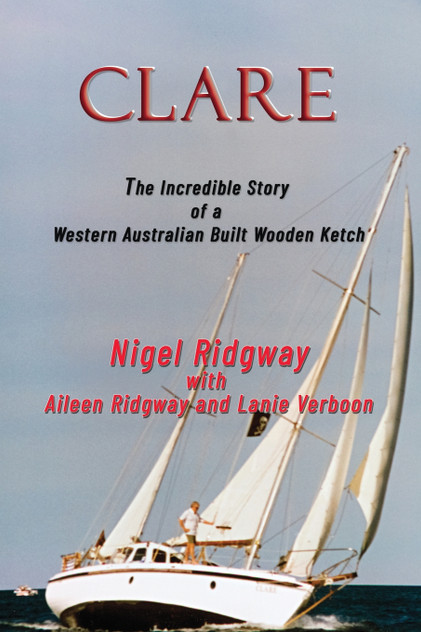
Nigel traces the history of the Western Australian built ketch, Clare, in this delightful tale. With contributions from the logbooks of his wife, Aileen and Lanie (the owner after the Ridgways) we...
This work has been selected by scholars as being culturally important and is part of the knowledge base of civilization as we know it.This work is in the public domain in the United States of...
Elizabeth Gaskell was a Victorian short storywriter and novelist. Her biography of Charlotte Bronte is her most famous work. Gaskell's novels portray varied social classes. Gaskell saw and wrote...