India's struggle for independence was arguably the most momentous of the twentieth century, and central to it was the generation of powerful nationalist forces. In a series of detailed studies Anthony Low shows how the ambiguity of the British position conditioned the distinctive character of this struggle: how the British determination to hold fast their Indian empire (unlike the Americans in the Philippines) prior to 1942 was nonetheless complemented by a reluctance to resist their nationalist opponents in the unyielding ways of the French in Vietnam and the Dutch in Indochina. Much that Gandhi did, Professor Low concludes, would have been unnecessary in the Philippines and impossible in Indonesia and Vietnam, but astutely fitted the peculiar conditions of the nationalist struggle against the British in India. Published on the fiftieth anniversary of Indian independence, Britain and Indian Nationalism makes a major contribution to the historiography of modern India, to Britain's relations with its empire, and to the history of decolonisation in the twentieth century.
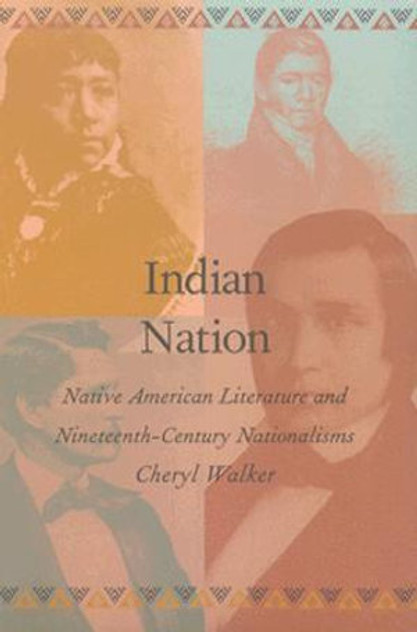
Indian Nation documents the contributions of Native Americans to the notion of American nationhood and to concepts of American identity at a crucial, defining time in U.S. history. Departing from...
This work has been selected by scholars as being culturally important, and is part of the knowledge base of civilization as we know it. This work was reproduced from the original artifact, and...
This work has been selected by scholars as being culturally important, and is part of the knowledge base of civilization as we know it.This work is in the "public domain in the United States of...