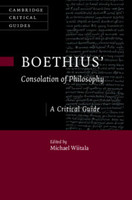
Boethius' Consolation of Philosophy was one of the most widely read and influential texts in medieval Europe, considering questions such as How can evil exist in a world governed by God? And how is happiness still attainable despite the vicissitudes of fortune? Written as a dialogue between Boethius and Lady Philosophy, and alternating between poetry and prose, the Consolation is of interest not only to philosophers but to students of classics and literature as well. In this Critical Guide, the first collection of philosophical essays devoted exclusively to the Consolation, thirteen new essays demonstrate its ongoing vitality and break open its riches for a new generation of readers. The essays reflect the diverse array of approaches in contemporary scholarship and attend to both the literary features and the philosophical content of the Consolation. The volume will be invaluable for scholars of medieval philosophy, medieval literature, and the history of ideas.
The 18th century was a wealth of knowledge, exploration and rapidly growing technology and expanding record-keeping made possible by advances in the printing press. In its...
The 18th century was a wealth of knowledge, exploration and rapidly growing technology and expanding record-keeping made possible by advances in the printing press. In its determination to preserve...
This work has been selected by scholars as being culturally important, and is part of the knowledge base of civilization as we know it.This work is in the "public domain in the United States of...
This classic philosophical work by Boethius explores the nature of free will, predestination, and the nature of happiness. P. Ridpath's translation and notes make this text accessible to modern...