Trending Bestseller

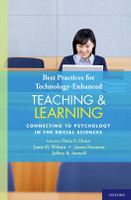
Best Practices for Technology-Enhanced Teaching and Learning

No reviews yet Write a Review
The chapters in this book offer guidance on a variety of timely issues related to teaching well with technological enhancements, including how to: - Help colleagues who eschew technology to learn to use it wisely - Foster collaboration between students and faculty using technology - Engage students more effectively by using technology - Use technology to advance a program's educational mission - Employ technological innovations at any level, from introductory to capstone - Marry traditional teaching with technological innovation
Hardback
14-February-2011
RRP: $199.95
$122.00
Ships in 5–7 business days
Hurry up! Current stock:
The use of technology and teaching techniques derived from technology is currently a bourgeoning topic in higher education. Teachers at all levels and types of institutions want to know how these new technologies will affect what happens in and outside of the classroom. Many teachers have already embraced some of these technologies but remain uncertain about their educational efficacy. Other teachers have waited because they are reluctant to try tools or techniques that remain unproven or, as is often the case, lack institutional support. This book is designed to help both groups, so that those with technological expertise can extend their knowledge, while technological novices can "ramp up" at their own pace and for their own purposes. Best Practices for Technology-Enhanced Teaching and Learning brings together expert teacher-scholars who apply and assess technology's impact on traditional, hybrid or blended, or completely on-line courses, relying on technology as a teaching tool for classroom management and interaction (e.g., Blackboard, PowerPoint, student response or "clicker systems," multimedia tools), as well as student-based uses of technology largely independent of instructors (e.g., social networking on popular sites including Facebook and MySpace). Each chapter will address how technological improvements can be connected to assessment initiatives, as is now routinely advocated in psychology and social science education. The book features current scholarship and pedagogy involving innovative technology that impacts on student learning in psychology and related disciplines, focusing also on student reactions to these novel technologies, and proper assessments of how well they promote learning. This text will serve as the standard reference on emerging technologies for undergraduate instructors.    

This product hasn't received any reviews yet. Be the first to review this product!

RRP: $199.95
$122.00
Ships in 5–7 business days
Hurry up! Current stock:

Best Practices for Technology-Enhanced Teaching and Learning

RRP: $199.95
$122.00

Description

The use of technology and teaching techniques derived from technology is currently a bourgeoning topic in higher education. Teachers at all levels and types of institutions want to know how these new technologies will affect what happens in and outside of the classroom. Many teachers have already embraced some of these technologies but remain uncertain about their educational efficacy. Other teachers have waited because they are reluctant to try tools or techniques that remain unproven or, as is often the case, lack institutional support. This book is designed to help both groups, so that those with technological expertise can extend their knowledge, while technological novices can "ramp up" at their own pace and for their own purposes. Best Practices for Technology-Enhanced Teaching and Learning brings together expert teacher-scholars who apply and assess technology's impact on traditional, hybrid or blended, or completely on-line courses, relying on technology as a teaching tool for classroom management and interaction (e.g., Blackboard, PowerPoint, student response or "clicker systems," multimedia tools), as well as student-based uses of technology largely independent of instructors (e.g., social networking on popular sites including Facebook and MySpace). Each chapter will address how technological improvements can be connected to assessment initiatives, as is now routinely advocated in psychology and social science education. The book features current scholarship and pedagogy involving innovative technology that impacts on student learning in psychology and related disciplines, focusing also on student reactions to these novel technologies, and proper assessments of how well they promote learning. This text will serve as the standard reference on emerging technologies for undergraduate instructors.    

Customers Also Viewed