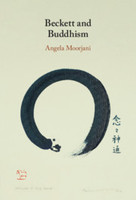
Beckett and Buddhism undertakes a twenty-first-century reassessment of the Buddhist resonances in Samuel Beckett's writing. These reverberations, as Angela Moorjani demonstrates, originated in his early reading of Schopenhauer. Drawing on letters and archives along with recent studies of Buddhist thought and Schopenhauer's knowledge of it, the book charts the Buddhist concepts circling through Beckett's visions of the 'human predicament' in a blend of tears and laughter. Moorjani offers an in-depth elucidation of texts that are shown to intersect with the negative and paradoxical path of the Buddha, which she sets in dialogue with Western thinking. She brings further perspectives from cognitive philosophy and science to bear on creative emptiness, the illusory 'I', and Beckett's probing of the writing process. Readers will benefit from this far-reaching study of one of the most acclaimed writers of the twentieth century who explored uncharted topologies in his fiction, theatre, and poetry.
"On Beckett: Essays and Criticism" is the first collection of writings about the Nobel Prizewinning author that covers the entire spectrum of his work, and also affords a rare glimpse of the private...
When the daughter of a federal judge is abducted, private security firm Blackout must find her.Psychologist Samantha Reynolds doesn't know why someone is targeting her. Even after a risky mission to...