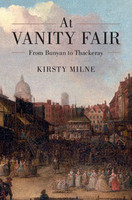
At Vanity Fair tells the story of Bunyan's powerful metaphor, exploring how Vanity Fair was transformed from an emblem of sin and persecution into a showcase for celebrity, wealth and power. This literary history, focusing on reception, adaptation and influence, traces the fictional representation of Vanity Fair over three centuries from John Bunyan's masterpiece, The Pilgrim's Progress (1678), to William Makepeace Thackeray's own Vanity Fair (1847-8). It explores the influence of anonymous journalists and booksellers alongside well-known authors including Ben Jonson, Samuel Richardson and Thomas Carlyle. Over time, Bunyan's dystopian fantasy has been altered and repurposed to characterise consumer capitalism, channelling memories that inform and unsettle modern hedonism. By tracking the idea of 'Vanity Fair' against this shifting background, the book illuminates the relationship between the individual and the collective imagination, between what is culturally available and what is creatively impelled.
This work has been selected by scholars as being culturally important and is part of the knowledge base of civilization as we know it.This work is in the public domain in the United States of...
In Victorian era England, longtime friends Becky Sharp and Amelia Sedley experience love and loss alongside the many colorful members of their unique social circle. Despite the ups and downs, they...
This work has been selected by scholars as being culturally important, and is part of the knowledge base of civilization as we know it. This work was reproduced from the original artifact, and...
Title: Vanity Fair, etc.Publisher: British Library, Historical Print EditionsThe British Library is the national library of the United Kingdom. It is one of the world's largest research libraries...