An Original Theory or New Hypothesis of the Universe, Founded upon the Laws of Nature
Although his yeoman father is said to have burnt his books to discourage excessive studiousness, Thomas Wright (1711-86) nevertheless acquired considerable knowledge in the fields of mathematics, navigation and astronomy. Later benefitting from the patronage of wealthy families, he also surveyed estates, designed gardens, and tutored aristocrats. He is best known, however, for his contribution to astronomy: this illustrated work of 1750 was his most famous publication. Written in the form of nine letters, the book quotes both poets and scientists in the opening discussion as Wright sets out to fuse, rather than separate, science and religion. Combining his observations of the Milky Way with his theological belief in a universe of perfect order, he notes, among other things, that our galaxy appears to be disc-shaped. While largely ignored by contemporary astronomers, Wright's ideas can be seen as a forerunner to more sophisticated conceptions of our galaxy's configuration.
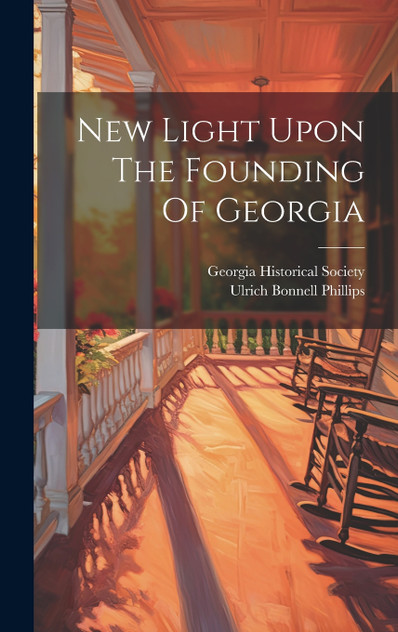
An important contribution to the history of the American South, this volume collects a series of essays that shed new light on the founding and early years of the colony of Georgia. Including...
A thorough analysis of international civil and commercial law by Arthur Kline Kuhn and Friedrich Meili, two distinguished legal scholars.This work has been selected by scholars as being culturally...
First published in the mid-19th century, this classic treatise on horse training offers a revolutionary approach to the art of riding, emphasizing the importance of establishing a harmonious...
This work has been selected by scholars as being culturally important, and is part of the knowledge base of civilization as we know it. This work was reproduced from the original artifact, and...