A Short History of the Steam Engine, first published in 1939, remains one of the most readable and clear explanations of the topic for the non-specialist. H. W. Dickinson limits himself to stationary engines and boilers, and only touches on the beginnings of locomotive and marine engines. He puts the stages of development in their context, showing how economic and social factors were involved in the evolution of the steam engine. The illustrations are plentiful and the text, while technical, never becomes impenetrable. The successive improvements to the simple engines of the seventeenth century, as new materials or purposes arose, are developed chapter by chapter to the twentieth century. Each engineer was building on the work of his predecessors, rather than there being any single inventor of genius. Dickinson also wrote biographies of key figures of the Industrial Revolution, which are being reissued in this series.
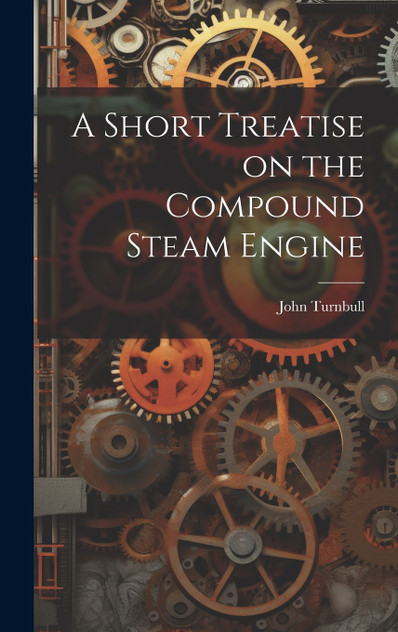
In this concise and informative work, John Turnbull offers a detailed analysis of the steam engine, an innovation that played a key role in the Industrial Revolution. Turnbull's clear and accessible...
This work has been selected by scholars as being culturally important, and is part of the knowledge base of civilization as we know it.This work is in the "public domain in the United States of...
This book has been considered by academicians and scholars of great significance and value to literature. This forms a part of the knowledge base for future generations. We have represented this book...
This work has been selected by scholars as being culturally important, and is part of the knowledge base of civilization as we know it.This work is in the "public domain in the United States of...